
Strumenti stonati
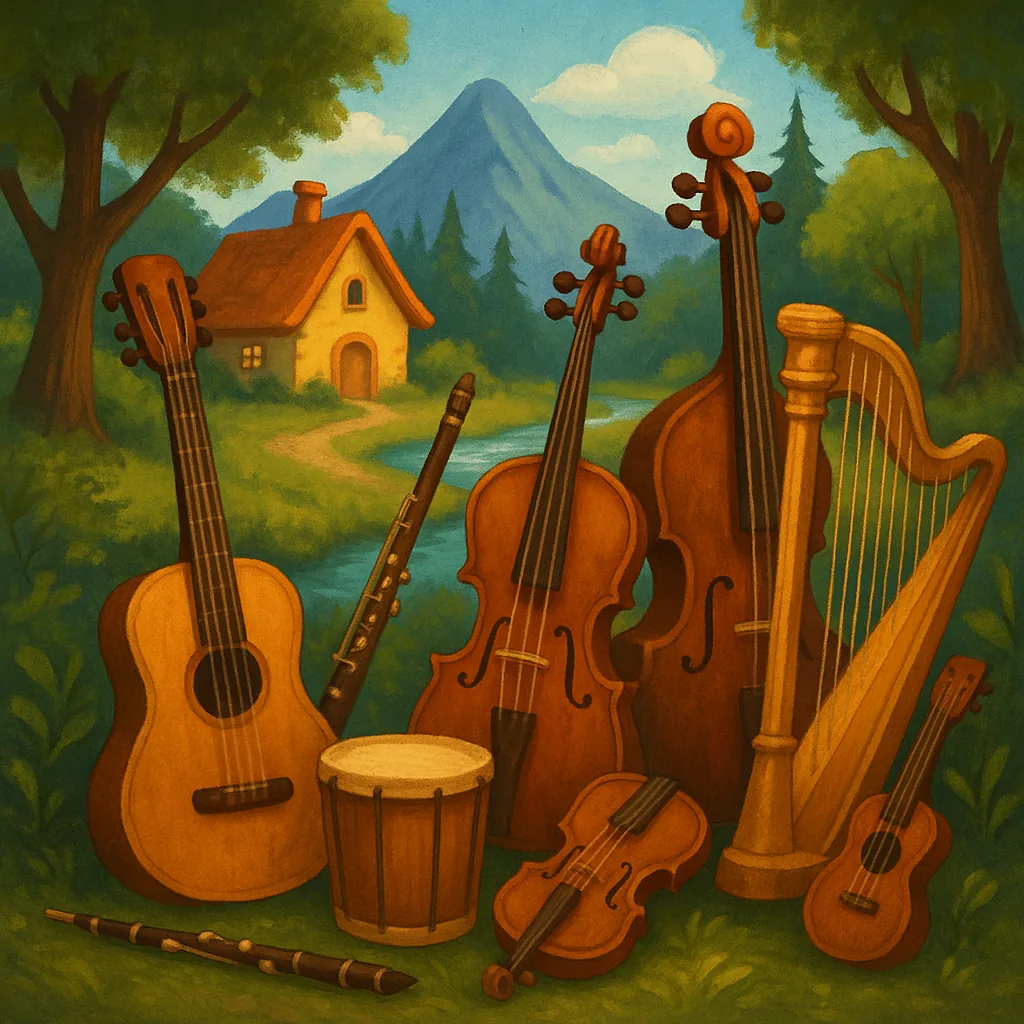
Strumenti stonati
Sulla riva di un ruscello, dove nuotava una gran quantità di pesciolini di tutti i colori, abitava una famigliola: mamma, babbo e sette figlioli — quattro maschietti e tre femminucce. La loro casa era un po’ distante dal paese di Strumentopoli, ma vicini al ruscello e accanto al Grande Bosco ci si stava proprio bene.
La mamma coltivava con cura le verdure nell’orto. Il babbo, invece, era un artigiano del legno e creava strumenti musicali con i tronchi migliori, scelti tra gli alberi più solidi e profumati del bosco.
I ragazzi andavano a scuola in paese. In inverno ci arrivavano con gli sci, mentre in primavera e autunno viaggiavano su un carretto trainato da due cerbiatti — uno bianco e uno nero, come le note del pianoforte. Prima della partenza, il babbo li contava uno per uno per assicurarsi che nessuno mancasse. Poi, come ogni giorno, si raccomandava:
«Comportatevi bene, non marinate la scuola e ricordatevi la favola di Pinocchio e del suo naso!» A quelle parole si salutavano tutti con un sorriso.
Il babbo tornava poi al suo lavoro. I suoi strumenti erano costruiti con cura e ottimo materiale, ma c’era un problema: erano stonati. Da buon liutaio, però, non si scoraggiava e la sua passione per la musica era così grande che insegnare ai figli a suonare era stato un divertimento. Aveva perfino scelto per loro nomi speciali: Chitarra, Violino, Oboe, Liuto, Arpa, Bongo e Ukulele.
La mamma non fece obiezione. D’altronde, chiamarli con i nomi delle verdure sarebbe stato simpatico, ma forse i loro amici del paese li avrebbero presi in giro.
I bambini erano bravi a scuola e, quando tornavano a casa, si davano da fare nell’orto, aiutando la mamma. Un giorno, però, scambiarono delle piantine di ortica per lattuga: che pizzicore! E allora via tutti di corsa, un tuffo nel ruscello per rinfrescarsi e calmare il bruciore.
I pesciolini si sbellicavano dalle risate: «Ma siete proprio sciocchi! Ah ah ah!»
La mamma li aiutò a uscire dall’acqua e, rivolta ai pesci, disse: «Stasera, al tramonto, ci sarà un concerto nel cortile di casa. Si esibiranno i miei figli con i loro strumenti. Siete tutti invitati!»
I pesci risposero con entusiasmo: «Bene, grazie per l’invito! Arriveremo fin lì, tanto pioverà e sguazzare si potrà. Splich, sploch, splach!»
Quella sera fu una vera festa. Al concerto di musica un po’ strana e strampalata, tutti si divertirono da matti: i musicisti, gli animali arrivati dal bosco e pure i pesci — che la mamma provvedeva a spruzzare con l’acqua.
Dopo quella serata allegra, la vita riprese tranquilla, tra scuola, orto e anche il bosco. Infatti, nel tempo libero, a volte ci andavano ad aiutare il babbo a scegliere e tagliare il legno per costruire i suoi strumenti. Il Grande Bosco era ormai un luogo familiare per loro. Così, un giorno, mentre ci giocavano arrampicandosi sugli alberi, i ragazzini videro un gruppo di gnomi che complottavano irrequieti. Si nascosero dietro a dei cespugli, ad osservare e ascoltare i loro discorsi.
La riunione, convocata in gran fretta, era per prendere una decisione su un pericolo imminente. C’era una terribile tempesta in arrivo. Si parlava di un vento d’uragano che non si era mai visto né sentito da cent’anni — o forse più — e che stava per raggiungere il bosco.
«Bisogna fermarlo, con ogni mezzo» dicevano gli gnomi.
Così, decisero di chiedere aiuto a un vecchio alleato: il Grande Guerriero della Montagna, armato di spada e poteri magici. Colui che in passato aveva già sconfitto draghi e perfino extraterrestri che volevano conquistare la Terra.
I sette bambini, allarmati dalla notizia e decisi ad aiutare nella battaglia, corsero velocemente verso casa, anche per avvisare gli abitanti del villaggio del pericolo incombente. Intanto il vento si avvicinava. Si sentiva da lontano: era selvaggio e ululante. Al suo passaggio, gli alberi si piegavano fino a sfiorare il suolo. Alcuni ondeggiavano, altri si spezzavano o venivano sradicati.
Gli abitanti di Strumentopoli, che cominciavano a sentire il vento per le strade del paese e videro il Grande Guerriero scendere dalla montagna, si allarmarono, ma non si fecero prendere dal panico. Ognuno prese il suo strumento e tutti si misero a correre verso la casa sul ruscello per aiutare la famiglia che ci viveva e, insieme a loro, provare a salvare il Grande Bosco.
Allo stesso tempo, anche i pesciolini colorati arrivarono, uniti e determinati, e così fecero anche gli altri animali del bosco e del ruscello: «Tutti insieme possiamo formare una barriera e bloccare il vento!» dissero all’unisono.
A quel punto, anche i ragazzini della famiglia, rientrati affannati dalla corsa, si fecero avanti e dissero: «Anche noi abbiamo gli strumenti musicali del babbo; sono strani, un po’ stonati… ma se li suoniamo tutti insieme, forse riusciremo a fermare la bufera.» E, così dicendo, entrarono in casa e tornarono in un battibaleno.
Gli gnomi, conoscendo bene i limiti di quegli strumenti, con un incantesimo misero in atto una magia musicale molto potente.
Quando i ragazzini iniziarono a suonare, accadde qualcosa di speciale. La musica, per la prima volta, fu melodiosa, armonica e coinvolgente. Ad uno ad uno, anche tutti gli abitanti di Strumentopoli si aggregarono ed ognuno, con il proprio strumento, contribuì come se tutti fossero parte di una grande orchestra.
Il vento d’uragano, che era impegnato in un combattimento furioso con il Grande Guerriero della Montagna, la sentì da lontano e immediatamente cominciò a calmarsi. Il suo ululare iniziò a moderare di potenza e, quando arrivò vicino al bosco, era una fresca tramontana che, infine, si trasformò in una dolce brezza di valle. Il vento ora era divenuto parte di quella meravigliosa orchestra — la battaglia era stata vinta per merito di tutti. Ognuno aveva offerto la propria musica e aveva contribuito al successo.
«L’unione fa la forza!» dissero tutti insieme, soddisfatti.
Il babbo liutaio continuò a costruire strumenti con i legni più pregiati offerti dal bosco. Erano talmente belli e suonavano così bene che si diceva fossero i più melodiosi mai ascoltati.
I figli — Chitarra, Violino, Oboe, Liuto, Arpa, Bongo e Ukulele — entrarono a far parte della banda del paese. Ad ogni festa, suonavano con successo, tra applausi e sorrisi. Anche gli gnomi e il Grande Guerriero ascoltavano la loro musica… dal bosco e dalla montagna.
I pesciolini colorati nuotavano e danzavano felici nel ruscello e, quando qualcuno passava di lì, lo salutavano con allegri schizzi: «Splish! Splosh! Splash!»
La famiglia continuò a vivere vicino al Grande Bosco e, nelle sere d’estate, quando finalmente tutto diventava silenzioso, si sdraiavano lungo la riva del ruscello e guardavano le stelle in cielo. I loro cuori raccontavano… e la notte scriveva il lieto fine delle favole.
The Out-of-Tune Instruments
On the bank of a stream, where a great many little fish of every colour swam, there lived a small family: Mamma, Babbo and seven children — four little boys and three little girls. Their house was some way from the town of Strumentopoli, but there by the stream, beside the Great Forest, it was a lovely place to be.
Mamma tended the vegetables in the kitchen garden with great care. Babbo, on the other hand, was a woodworker who made musical instruments from the finest trunks, chosen from the sturdiest and most fragrant trees in the forest.
The children went to school in town. In winter they got there on skis, while in spring and autumn they rode in a little cart drawn by two fawns — one white and one black, like the keys of a piano. Before they set off, Babbo counted them one by one to make sure nobody was missing. Then, as he did every day, he reminded them:
“Behave yourselves, don’t play truant and remember the tale of Pinocchio and his nose!” At those words they all said goodbye with a smile.
Babbo then went back to his work. His instruments were made with care and from excellent materials, but there was a problem: they were out of tune. Being a good luthier, though, he did not lose heart, and his love of music was so great that teaching his children to play had been a pleasure. He had even chosen special names for them: Guitar, Violin, Oboe, Lute, Harp, Bongo and Ukulele.
Mamma had no objection. After all, naming them after vegetables would have been fun, but their friends in town might well have teased them.
The children did well at school and, when they came home, they busied themselves in the kitchen garden, helping Mamma. One day, however, they mistook some young nettles for lettuce: how they stung! Off they all ran at once — a plunge into the stream to cool down and soothe the burning.
The little fish split their sides laughing: “How silly you are! Ha ha ha!”
Mamma helped them out of the water and, turning to the fish, said: “This evening, at sunset, there will be a concert in our courtyard. My children will perform on their instruments. You are all invited!”
The fish answered eagerly: “Lovely, thank you for the invitation! We’ll come all the way over — it’s going to rain anyway, so splash we shall. Splish, splosh, splash!”
That evening was a real party. At the concert of rather strange and madcap music, everyone had a whale of a time: the musicians, the animals who had come from the forest and the fish too — whom Mamma kept sprinkling with water.
After that merry evening, life went back to its quiet ways, between school, the kitchen garden and the forest too. In their free time, in fact, they sometimes went there to help Babbo choose and cut the wood for his instruments. The Great Forest had become a familiar place to them. And so, one day, while they were playing there, climbing the trees, the children saw a group of gnomes plotting together, all in a fluster. They hid behind some bushes to watch and listen to what they were saying.
The meeting, called in great haste, was to decide what to do about a danger close at hand. A terrible storm was on its way. There was talk of a hurricane wind such as had not been seen or heard for a hundred years — or perhaps more — and it was about to reach the forest.
“It must be stopped, by any means,” the gnomes were saying.
So they decided to ask an old ally for help: the Great Warrior of the Mountain, armed with a sword and magic powers. The very one who, long ago, had already defeated dragons and even aliens who wanted to conquer the Earth.
The seven children, alarmed by the news and determined to help in the battle, ran home as fast as they could, also to warn the people of the village of the looming danger. Meanwhile the wind was drawing closer. It could be heard from far away: it was wild and howling. As it passed, the trees bent until they almost touched the ground. Some swayed, others snapped or were torn up by the roots.
The people of Strumentopoli, who were beginning to feel the wind in the streets of the town and had seen the Great Warrior coming down from the mountain, grew alarmed, but they did not panic. Everyone took up their instrument and they all set off running towards the house by the stream to help the family who lived there and, together with them, try to save the Great Forest.
At the same time, the colourful little fish arrived too, united and determined, and so did the other animals of the forest and the stream: “All together we can make a barrier and block the wind!” they said in unison.
At that point the children of the family, back home and out of breath from running, stepped forward too and said: “We have Babbo’s musical instruments as well; they’re strange, a little out of tune… but if we all play them together, perhaps we can stop the storm.” And, so saying, they went into the house and were back in a flash.
The gnomes, knowing the shortcomings of those instruments all too well, cast a spell and set a very powerful musical magic to work.
When the children began to play, something special happened. For the first time, the music was tuneful, harmonious and stirring. One by one, all the people of Strumentopoli joined in too, and each of them, with their own instrument, added their sound as if they were all part of one great orchestra.
The hurricane wind, locked in a furious fight with the Great Warrior of the Mountain, heard it from afar and at once began to calm down. Its howling started to lose its force and, by the time it came near the forest, it was a cool north wind, which in the end turned into a gentle valley breeze. Now the wind had become part of that marvellous orchestra — the battle had been won thanks to everyone. Each of them had offered their own music and played a part in the victory.
“Unity is strength!” they all said together, well pleased.
Babbo the luthier went on making instruments from the finest woods the forest offered. They were so beautiful and sounded so good that people said they were the most tuneful ever heard.
The children — Guitar, Violin, Oboe, Lute, Harp, Bongo and Ukulele — joined the town band. At every festival they played to great success, amid applause and smiles. Even the gnomes and the Great Warrior listened to their music… from the forest and from the mountain.
The colourful little fish swam and danced happily in the stream and, whenever someone passed by, they greeted them with cheerful splashes: “Splish! Splosh! Splash!”
The family went on living near the Great Forest and, on summer evenings, when at last everything fell silent, they would lie on the bank of the stream and look at the stars in the sky. Their hearts told stories… and the night wrote the happy endings of fairy tales.
Trova le Storie Sotto Le Stelle sul tuo lettore preferito. Find Storie Sotto Le Stelle on your favourite player.